

DOVO-SEDEE, and the Australian connection
A DOVO-SEDEE team recovers unexploded First World War shells from a field in Flanders, Belgium.
How was The Project created?
Recovering The Past is constructed around two key elements. One, the work of the DOVO-SEDEE bomb-disposal team, and the other, Australia’s artistic and cultural heritage of a century ago.
At the heart of this exhibition, are my own images of an ongoing, century-old operation to clear Belgium’s West Flanders region of unexploded ammunition from the First World War.
Enter DOVO-SEDEE, and a legacy of unexploded ammunition
DOVO-SEDEE is the Belgian army’s bomb-disposal team. The team is best known for its operations on the former First World War battlefields of West Flanders, a region devastated by the battles that raged here during the First World War.
Commencing on 31st July 1917, the opening barrage of the Battle of Passchendaele saw 4.5 million shells fired over just ten days. With official estimates suggesting that 20-25% of all shells fired in the First World War failed to explode, the unexploded ammunition from that opening barrage alone will be in the region of one million shells. The barrage was short; just ten days of a four year long war. Factor in the unexploded shells from the war’s full duration, and the scale of the task which confronts DOVO-SEDEE in this region becomes clear.
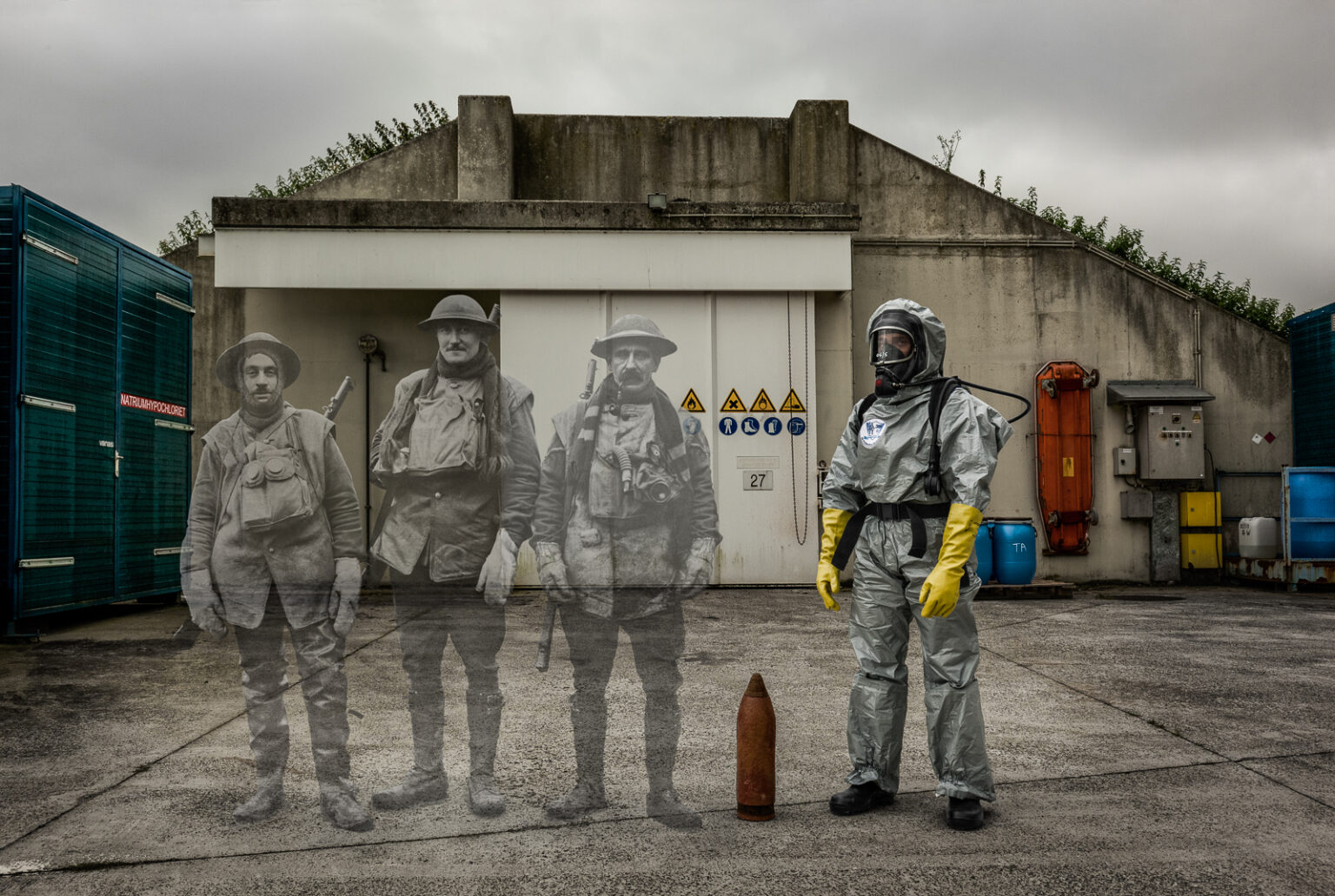
#Flanders 6950
In 2011, DOVO-SEDEE granted me access to photograph the team’s work, and so the project began. Over a period of seven years, I photographed all aspects of DOVO-SEDEE’s West Flanders operation, including technical processes rarely seen beyond the confines of their Poelkapelle base.
Each of the exhibition’s montage artworks feature DOVO-SEDEE personnel appearing side by side with Australian soldiers of the First World War. Two groups of men of a century apart united in a land now at peace, Recovering The Past stands alone in this unique depiction of post-conflict achievement and reconciliation. I applied great care to the pairing of new and archival imagery, no final image was created by chance alone.
Continuity and equality are evident throughout project. Each and every man in the exhibition’s imagery have been treated as equals. In the above image, all four men are wearing their gas protection equipment, each is responding to the camera; the intervening century of time between these men has become an irrelevance.
A DOVO-SEDEE team member recovers unexploded First World War shells from the former battlefield of Passchendaele.
DOVO-SEDEE And Their Contribution to This Exhibition
Formed in 1920 in response to the vast quantities of unexploded ammunition that littered the Flanders landscape, DOVO-SEDEE’s work was expected to be completed within three years. It wasn’t to be. Now in their second century of continuous operations in Belgium’s Flanders region, their work is expected to take many more years to complete.
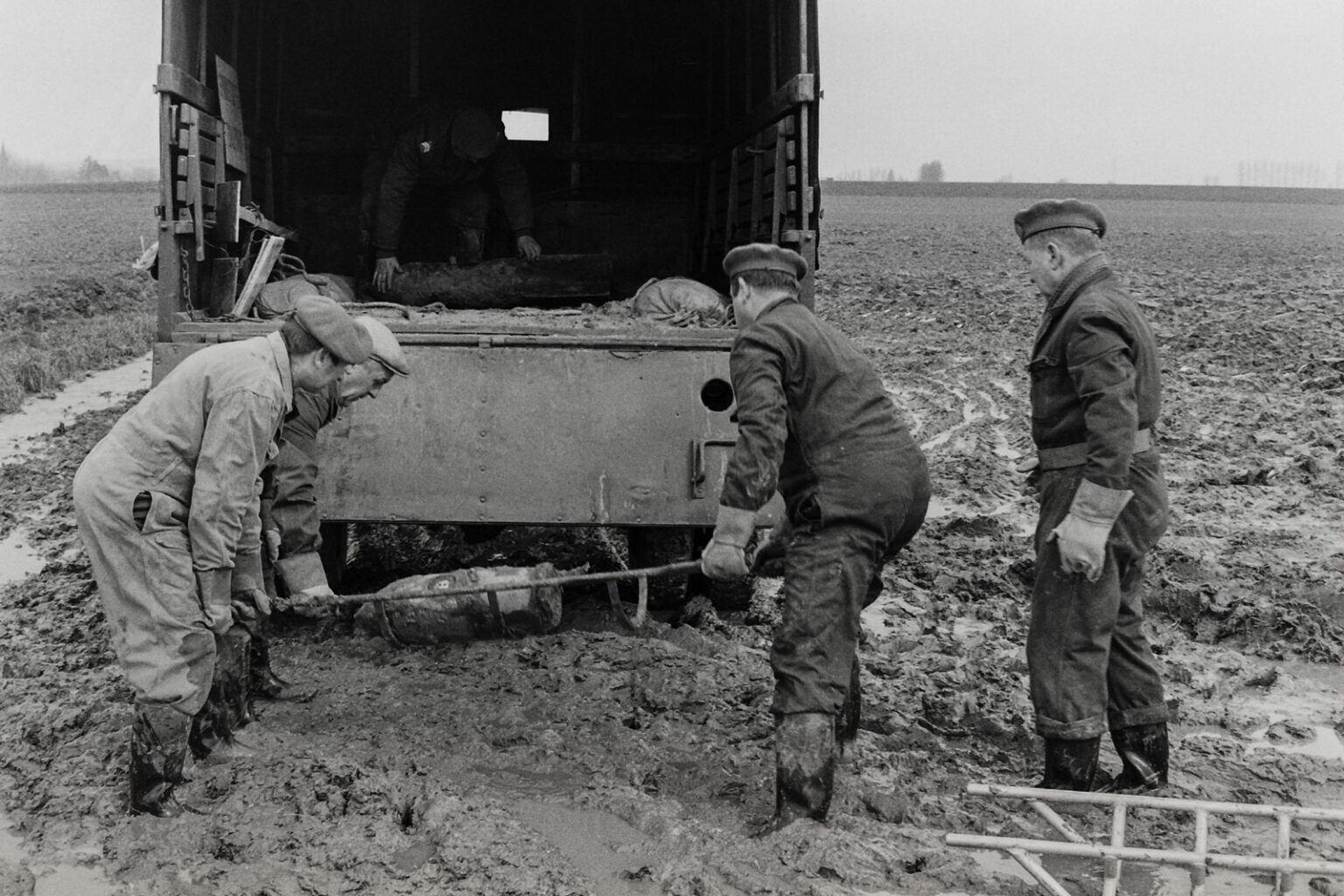
An image taken in the 1960’s of DOVO personnel recovering an unexploded shell – Image credit : DOVO-SEDEE
The only unit of the Belgian armed forces authorised to continue its operations by the occupying German army during the Second World War, today, a century after the signing of the Armistice, DOVO-SEDEE teams routinely recover circa 200,000kg of unexploded ammunition per year from Belgium’s former battlefields.
Responding to a call from the local police, a DOVO-SEDEE team will be dispatched from its Poelkapelle base to collect ammunition predominantly unearthed through farming and construction activities. All recovered ammunition is transported back to the unit’s base, where it will be identified, and ultimately destroyed through a series of highly-controlled processes.
It’s almost beyond imagination that so much First World War ammunition is still recovered more than a century after the war’s end. Alongside a similar operation in France, the work of these two respective teams represents a rare example of how one aspect of the First World War is still firmly with us.
The rarely seen aspects of DOVO-SEDEE’s behind-the-scenes work provided a rich source of locations for this project. Among the unique facilities in DOVO-SEDEE’s facility is its Living-Library of ammunition types. The most complete of its type in existence, and featuring an example of every type of munition type to have been used in Flanders, it operates as an essential source of reference to the unit’s personnel. As of 2023, it housed 1304 individual items of which 20% are still live. This fascinating location features within the exhibition’s imagery.
A detail of DOVO-SEDEE’s ‘living-library. A unique reference resource of ammunition types used in Flanders.
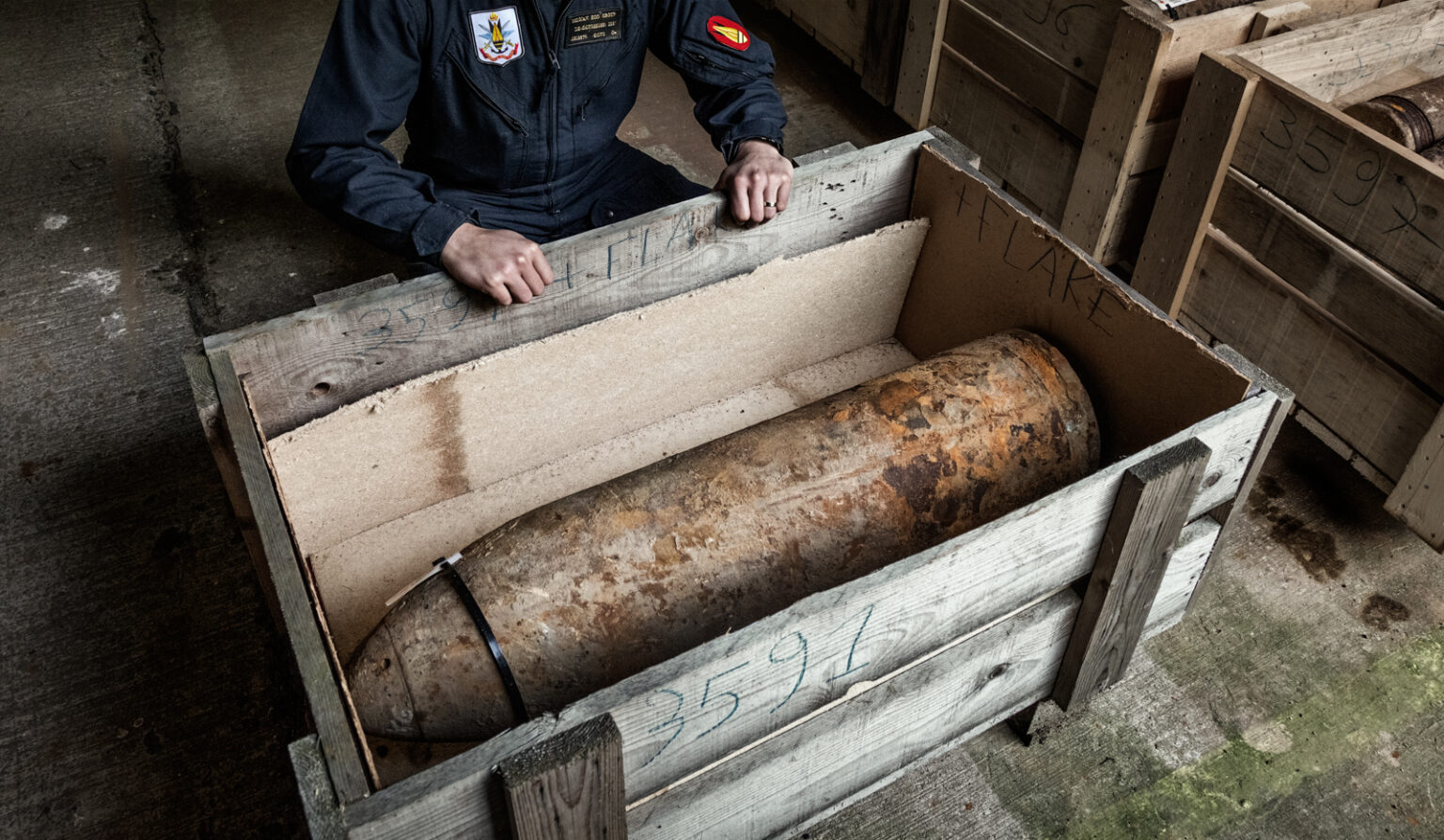
A large caliber High-explosive shell awaits its ultimate destruction.
DOVO-SEDEE’s teams collect and destroy ammunition with three main content types: High-explosive, toxic (gas), and shrapnel, with each type requiring specific handling and destruction processes. Each step in the processing of a shell from it’s identification through to destruction, is conducted within the confines of DOVO-SEDEE’s base.
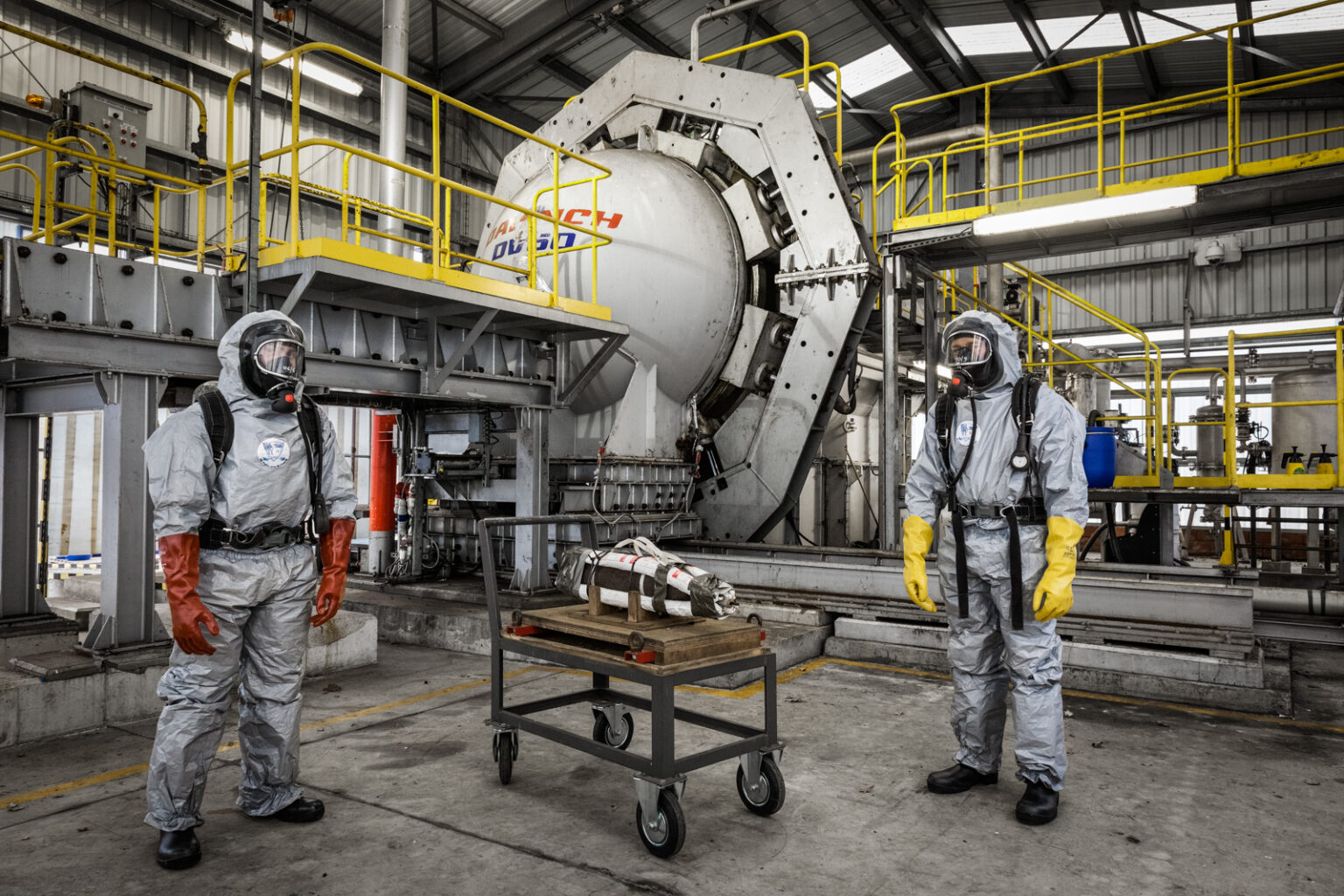
DOVO-SEDEE’s Contained Detonating Chamber (CDC)
DOVO-SEDEE’s Contained Detonating Chamber (CDC) was for many years the only such facility in Europe, and plays a vital role in enabling the destruction of shells containing the Clark toxin. These specific shells contain of high levels of Arsenic, and can only be destroyed in the chamber’s blast proof interior. Through unavoidable exposure to Arsenic, this facility’s operators wear bio-chemical protective suits.
Recovering The Past would not exist without the crucial support provided by DOVO-SEDEE and its personnel. In 2015, the work made its public debut at the Palais Des Nations, Geneva. In 2017, the work was exhibited at the world renowned In Flanders Fields Museum, Ypres, where it was viewed by more than 40,000 visitors.
As a component of Belgium’s centenary commemorations of the Great War, Recovering The Past will remain forever unique in being the only exhibition during that commemorative period to document the work of a modern-day bomb-disposal team on a former Great War battlefield.
The exhibition’s message is relayed through more than the work of DOVO-SEDEE alone. Enter the Australian connection.
The Australian Connection
Through its impressive and publicly available archival resources, Australia’s First World War heritage provided a comprehensive basis for Recovering The Past’s historic element.
Australian cultural icons, photographer Frank Hurley and artist Will Longstaff, produced work of such significance, that key aspects of their work have been adopted by Recovering The Past.
Frank Hurley
Pioneering photographer Hurley, first gained prominence through his participation on Sir Ernest Shackleton’s ill-fated Antarctic expedition. His much celebrated images of battle scenes along the First World War’s Western Front are the finest of that period
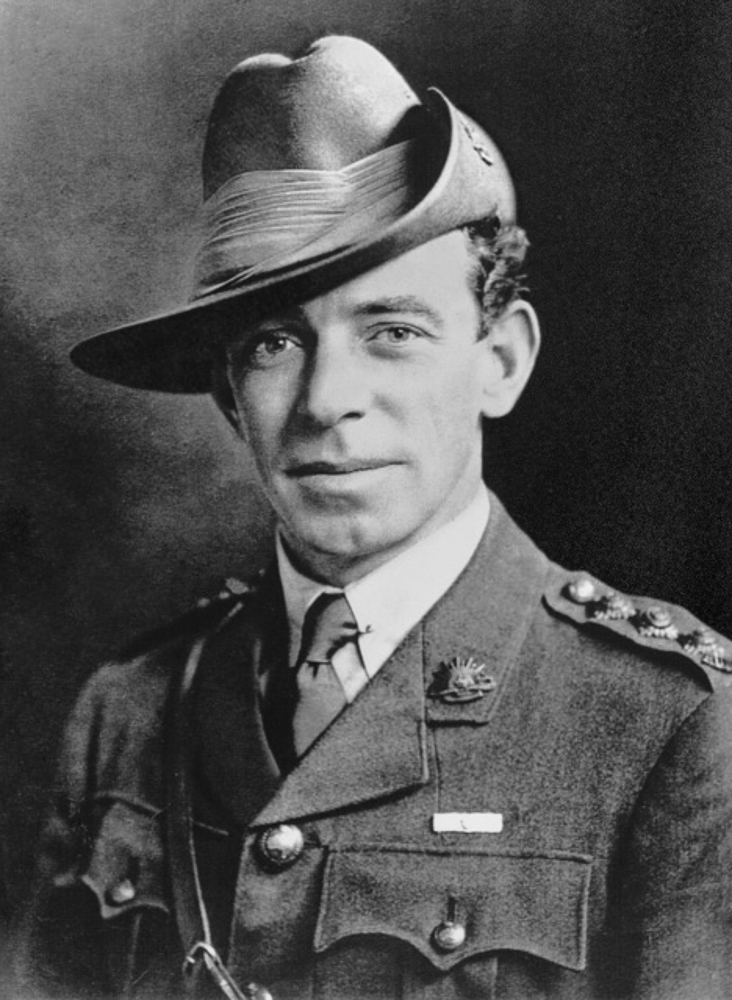
Image: Frank Hurley | Credit Australian war Memorial
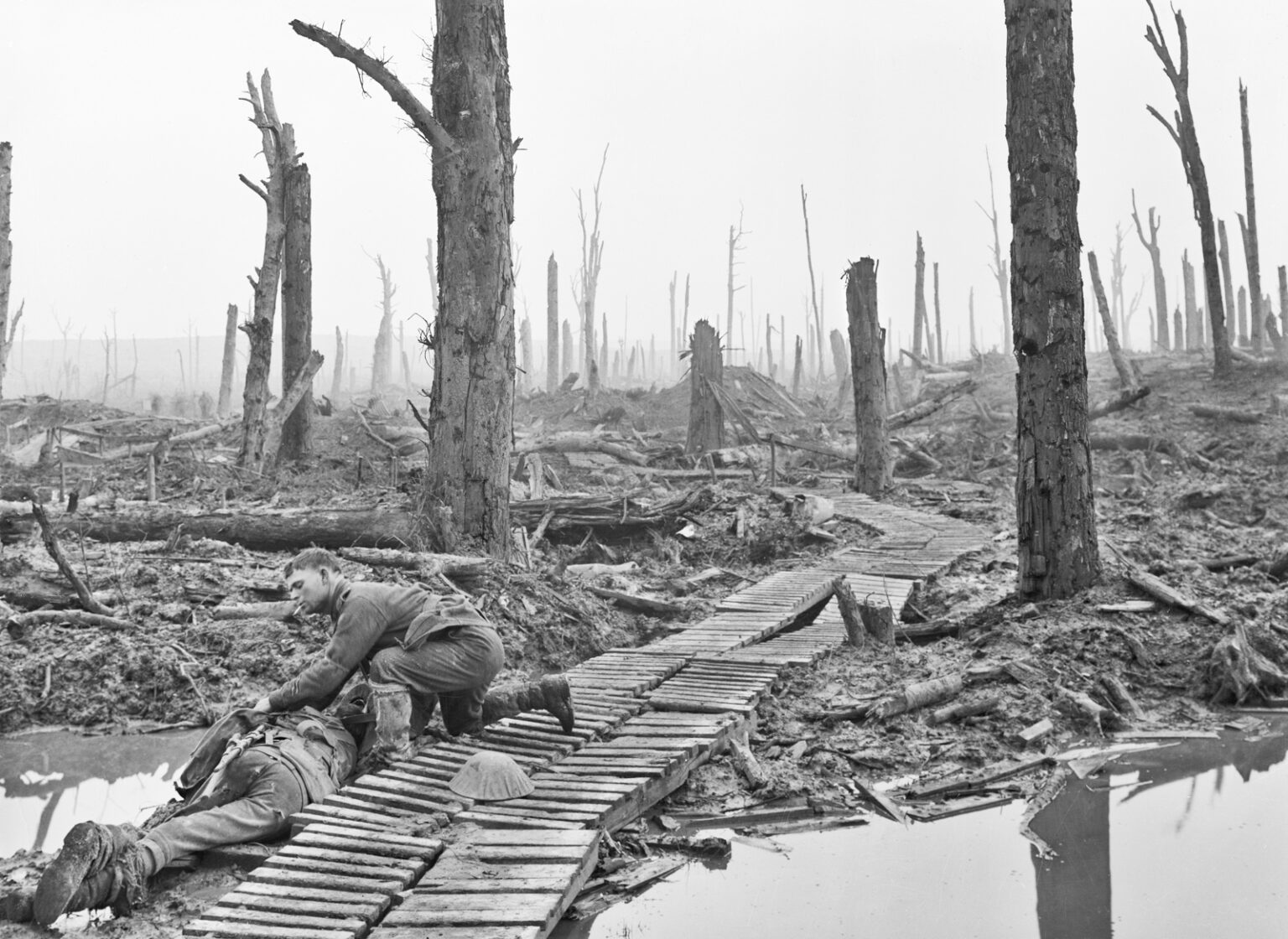
Image: Frank Hurley | Credit: Australian War Memorial
Hurley’s tenacity and natural sense of adventure, enabled him to take risks that other photographers would not consider. In conjunction with an eye for a great composition, his bravado has resulted in many of the most memorable images of that conflict.
Through extensive experience photographing at the war’s front lines, Hurley, concluded that a single image could not convey the ‘vast scale’ of events unfolding before him. He subsequently created six, now-famed composite images to tell the full story as he saw it. Comprised of a dozen separate components taken from his own negatives, ‘A Raid‘, or ‘Over The Top‘, is the most revered of these composite images.
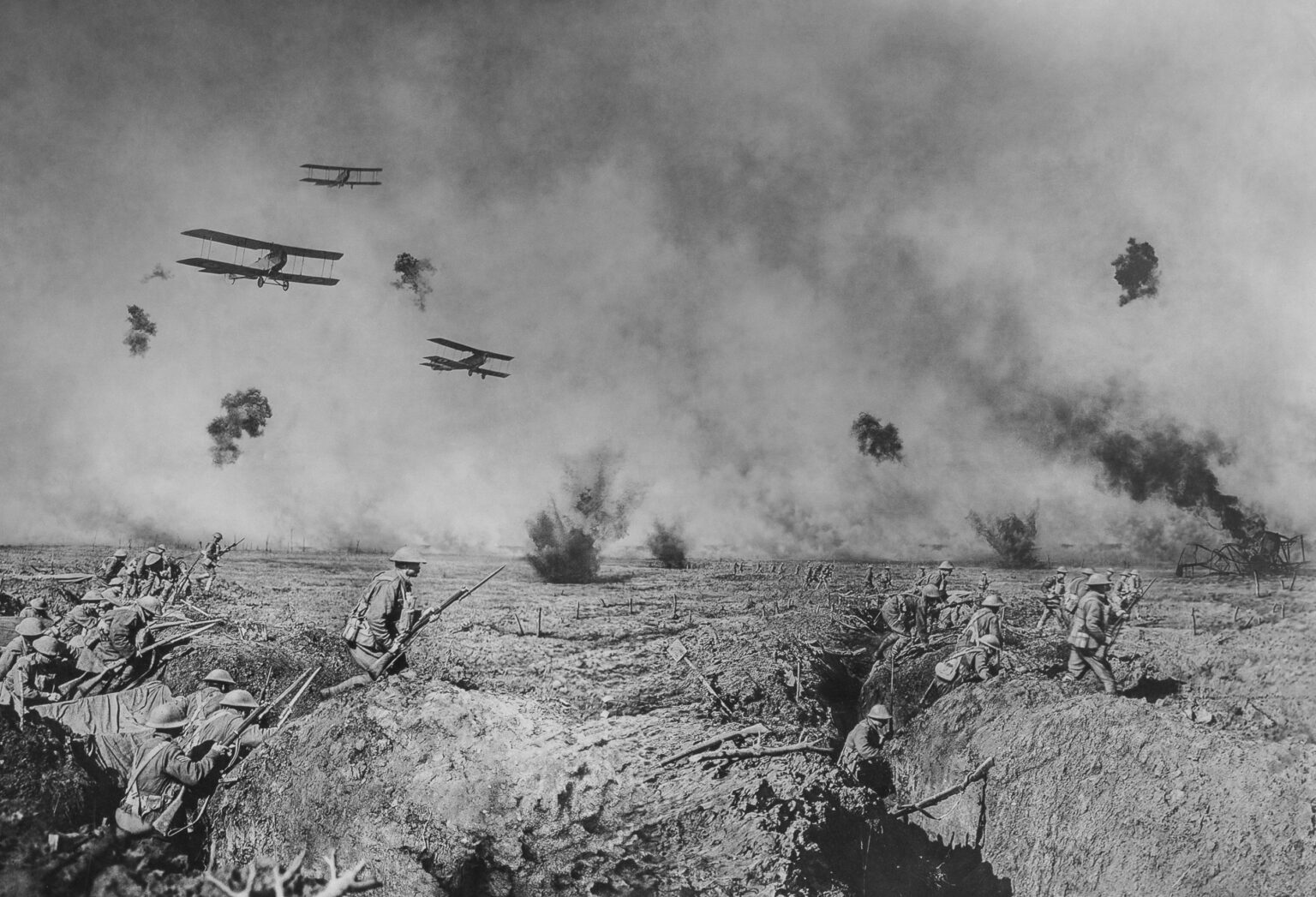
‘A Raid’ or ‘Over The Top’, the most revered of Hurley’s composite images | Credit: Australian War Memorial
Will Longstaff
Australian war artist Will Longstaff is best remembered for his work entitled ‘Menin Gate at Midnight‘.
Depicting an army of spirits of dead soldiers marching in front of the Menin Gate memorial, the painting now has iconic status. Recovering The Past has adopted the visual affect which Longstaff applied to the soldiers in his paintings.
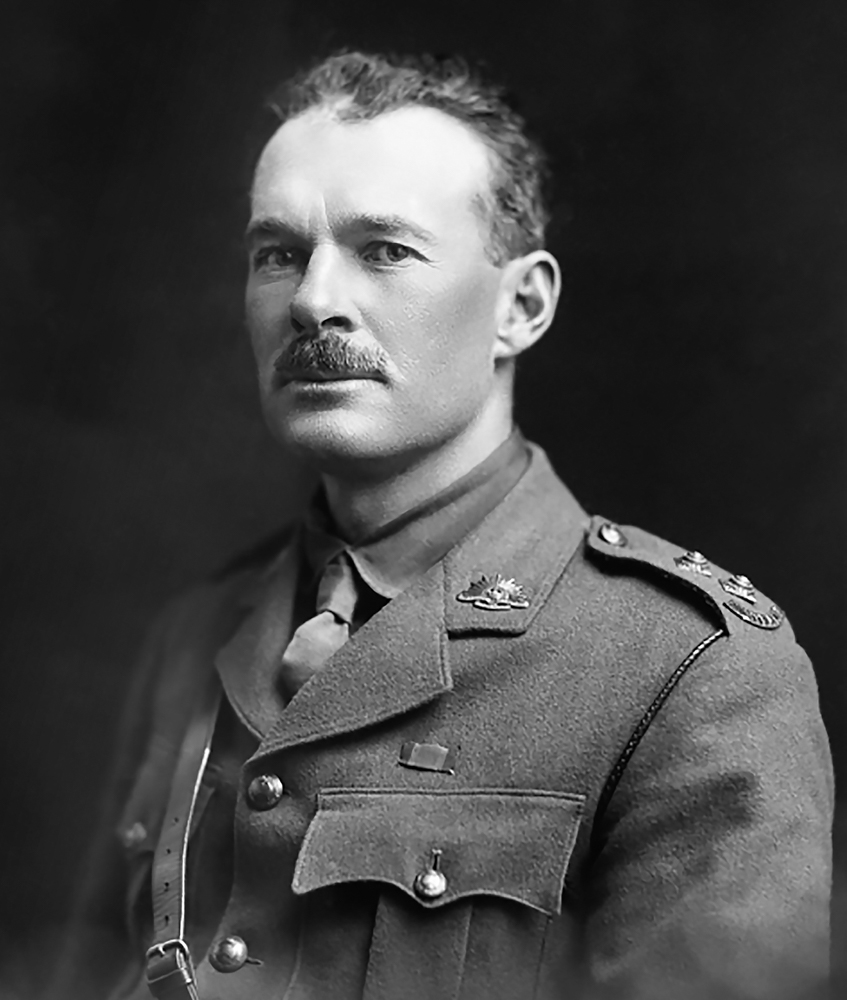
Image: Will Longstaff | Credit: Australian War Memorial
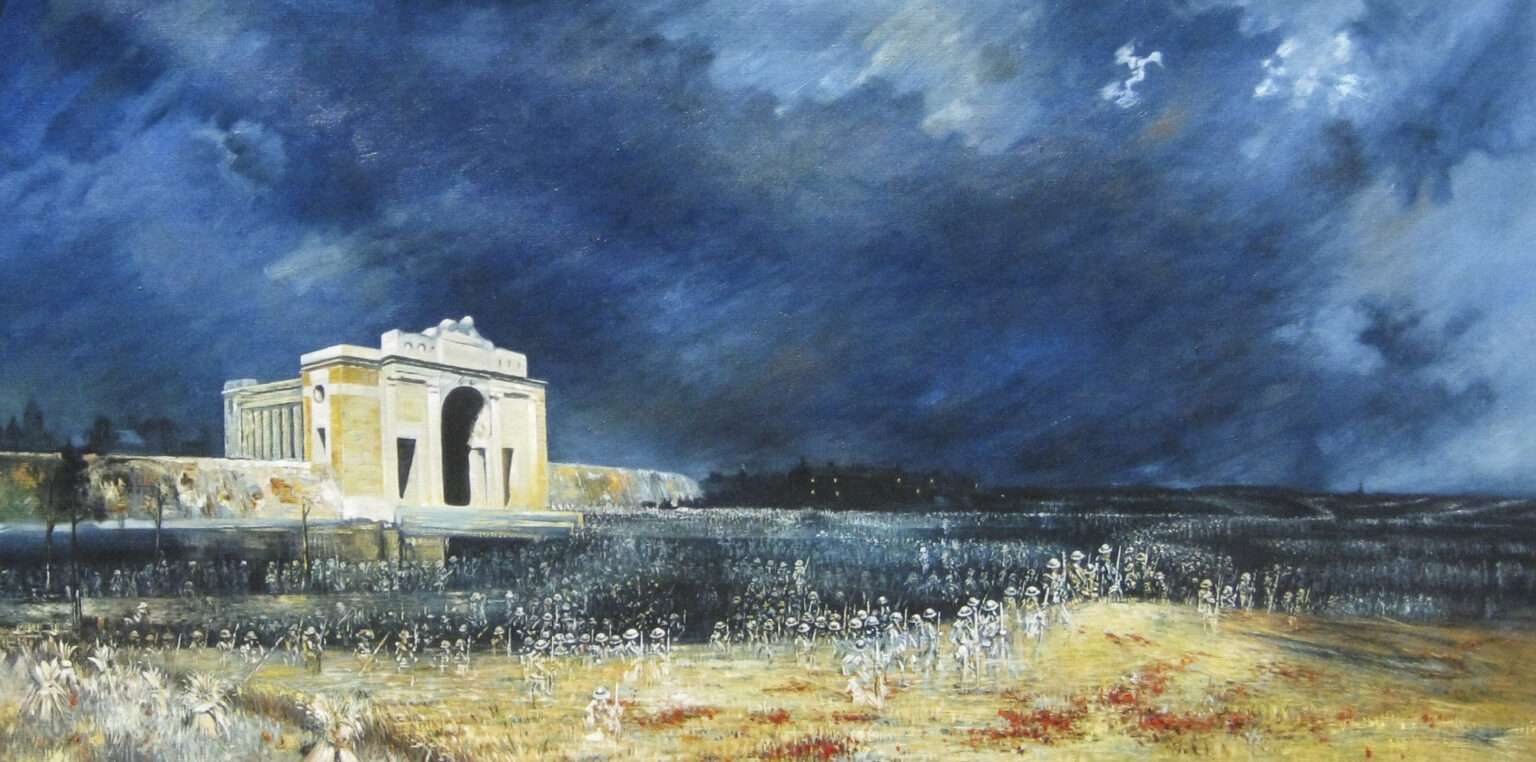
‘Menin Gate At Midnight’ by Will Longstaff | Credit: Australian War Memorial
The incorporation of Hurley and Longstaff’s artistic techniques into this exhibition’s imagery, make a compelling and cohesive Australian contribution in the structure of Recovering The Past.
Supporting this, a series of poignant personal-memoirs – sourced from Australia’s national archives – accompany the artworks. They tellingly reveal that the war’s social impact on Australia was not confined to the battlefields themselves.
The War's Impact on Australian Society
The twenty-five artworks of Recovering The Past are each accompanied by a text panel, which features a poignant, personal testimony of an Australian man or woman who was impacted by the First World War.
The Text Panels
Arranged in both a sequential and chronological order, the text panels play a crucial role conveying the social consequences of war narrative of this exhibition.
Two examples of Recovering The Past’s text panels are examined below. The first relates to the suicide of returned soldier Evan Joseph Derby, the second to Julia Goulding, the grieving mother of a missing Australian soldier.
“My mind is a blank – this will break my wife’s heart.”
Zeehan and Dundas Herald, Tas, Thursday 18th November 1920
The simple but desperate words on the note found with the revolver Evan Joseph Derby – of Canning Street, Melbourne – used to take his own life.
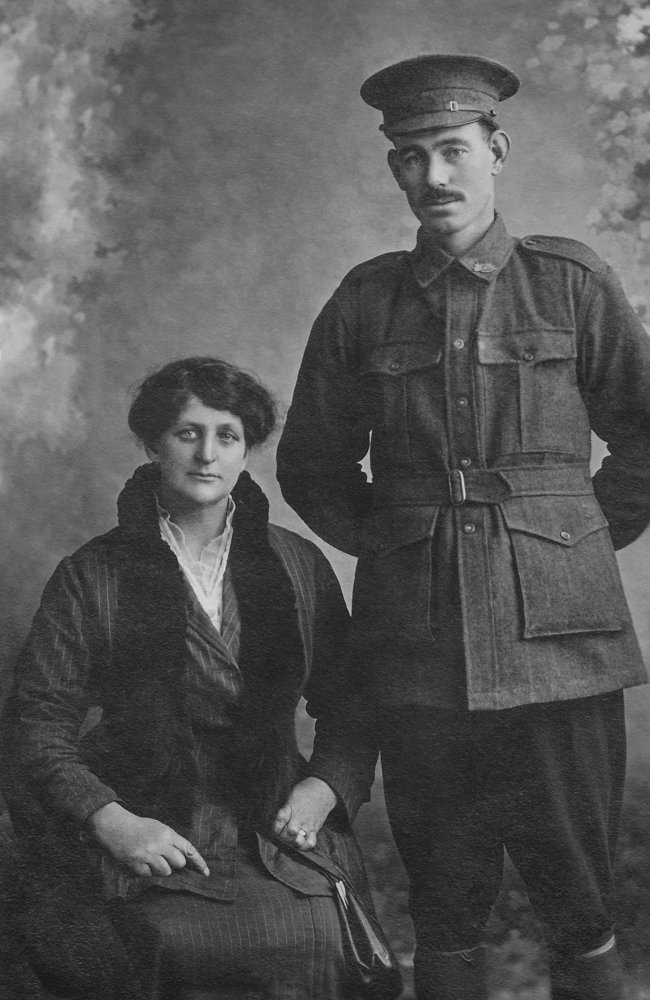
Evan and Alice Derby | Credit: The Derby family
Evan and Alice Derby are featured in the text of this exhibition, their story epitomises the long-term social consequences of war.
Married with four young children, Evan returned home from the war in March 1919. In the months after his return, he told a workmate he was suffering ‘very bitterly from pains in his head’.
On the 8th November 1920, a member of the public found Evan’s body; alongside him, a revolver and a suicide note. In the coroners report into Evan’s death, Alice explained her last contact with her husband:
‘When he left for work he seemed very quiet. He had been different since he got back from the war. I did not know he had a weapon’.
Despite having survived the war, Evan, alongside many thousands of other traumatised returning soldiers, had become a belated victim of it.
Alice raised their four children alone. Today, Evan and Alice share a plot in Melbourne’s Coburg Pine Ridge Cemetery. Neither appear on a war memorial, Evan’s service and their shared tragedy all but forgotten.
Evan and Alice now play an important part in this exhibition’s timeless message. Their story is just one of millions of similar tragedies repeated in conflicts around the world.
Julia Goulding And Her Search For Her Missing Son
Julia Goulding, a resident of South Brisbane, and the mother of Private John Joseph Goulding. Enlisting into the Australian imperial Force (AIF) on the 30th August 1915, John arrived in France on 23rd June the following year.
In a translated German message dated 22nd October 1919, it was confirmed that John Goulding had been killed in-action in Fromelles, France, on the 19th July 1916. This information was never relayed to John’s grieving mother.
In 1920, Julia wrote to the AIF headquarters:
‘I am writing to enquire of my son John Joseph GOULDING No555. B Company 31st Battalion AIF who was reported missing since July 19th 1916… I have waited patiently with an aching heart for news of him… I know he was not the only one by thousands, but he was my son, lent to me for 35 years… The suspense is what makes it so hard’
Julia Goulding died on the 19th July 1922, she was never to discover her son’s fate. In 2009, John’s remains were discovered along with 249 other missing soldiers in a series of mass graves in Fromelles, France.
Julia outlived her son by six years, four of which were after the war’s end. Yet the army Joseph served – and died for – neglected to even write to Julia to confirm his death.
Through this exhibition, Julia and Evan Joseph Derby are not now lost to history. Their grief and shared trauma in the years after the Armistice provide us all a century later, with an opportunity to learn from their experience.
The Asserting of 'Victim Status'
Recovering The Past asserts that anyone who has lost a loved one to war has not just been affected by it, but has also become the victim of it. Julia Goulding and Evan Derby are two such people.
These victims of war have no dedicated national memorials. With very few exceptions, the survivors of war – service personnel and civilians alike – are buried in millions of largely anonymous graves, in cemeteries across the world. Irrespective of their contribution, sacrifice and suffering as part of their nation’s war effort, they are a metaphorical army of largely-forgotten people.
The carefully chosen memoirs that appear in this exhibition should not be considered as something of the past alone, they remain a likely premonition of the consequences of all future conflicts.